
Build It Yourself or Let a Partner Build It First? Choosing the Right Technology Operating Model
When an organization decides to build a new product, digital capability, AI function, or technology team, one of the first questions is
 Author: Lokesh ML
Should we build it ourselves, or should we partner with someone who can build it for us?
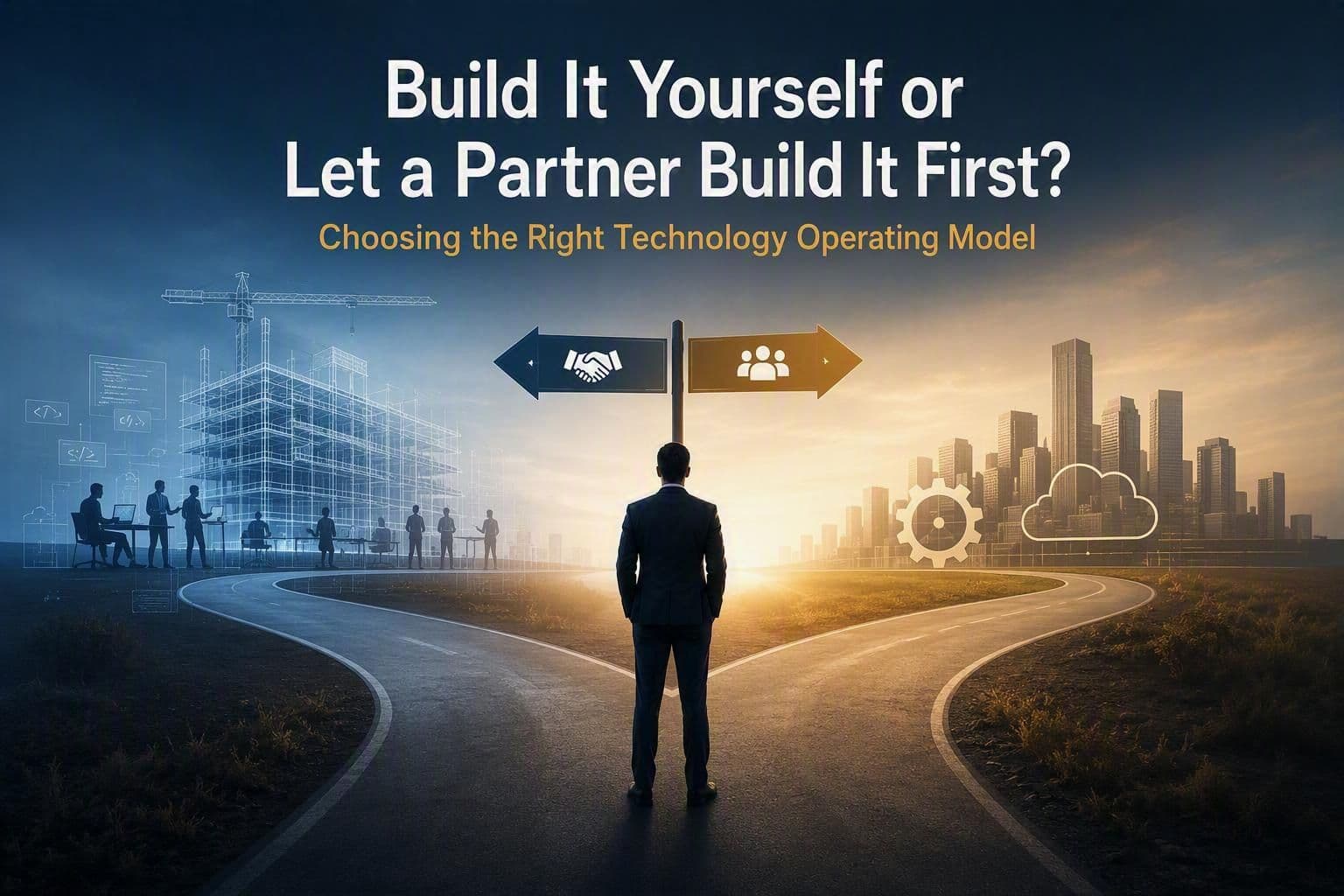
For many organizations, the answer lies between the two. Build-Operate-Transfer (BOT) and Build-Operate-Own (BOO) provide two different ways to use an external partner while deciding how much ownership and responsibility should remain with the organization.
Build-Operate-Transfer (BOT) and Build-Operate-Own (BOO).
Both can help an organization move faster without building everything internally from day one.
But they are designed for two very different end states.
The simplest way to think about them is:
BOT = Build it with a partner, operate it together, and eventually own it.
BOO = Build it with a partner and let the partner continue to own and operate it.
The right choice depends less on today's requirement and more on where you want the capability to be in three, five, or ten years.
What Is Build-Operate-Transfer (BOT)?
BOT allows an organization to establish a new technology capability with the help of an external partner and gradually take ownership of it.
The partner does not simply provide developers.
The partner helps establish the people, technology, processes, architecture, governance, and delivery capability required to run the function successfully.
A typical BOT journey has three stages.
1. Build
- The technology partner establishes the capability.
- This could include:
- Product and technology leadership
- Engineering team
- Architecture
- Cloud and DevOps
- QA and testing
- Data and AI capabilities
- Security
- Product management
- Delivery processes
- Development infrastructure
- Governance and reporting
The objective is to create a functioning technology organization, not just a project team.
2. Operate
Once established, the partner operates the capability.
The team delivers products, manages releases, establishes processes, improves engineering maturity, and demonstrates that the capability can operate reliably.
During this stage, the client can also begin building its internal organization around the capability.
This may include hiring leadership, identifying internal owners, and gradually bringing key responsibilities into the organization.
3. Transfer
Once the organization is ready, ownership transitions from the partner to the client.
The transfer can include:
- People
- Technology
- Intellectual property
- Documentation
- Processes
- Architecture
- Infrastructure knowledge
- Vendor relationships
- Operational responsibilities
- Leadership responsibilities
A successful BOT should therefore have transfer in mind from day one.
What Is Build-Operate-Own (BOO)?
BOO follows a different philosophy.
The technology partner builds the capability, operates it, and continues to own responsibility for the technology function over the long term.
The client remains responsible for:
- Business strategy
- Product direction
- Governance
- Business outcomes
- Priorities
- Performance oversight
The partner remains responsible for building and operating the technology capability.
This means the organization does not need to create a large internal technology organization simply to operate the capability.
BOO can be particularly attractive when technology is important to the business, but building and managing the technology organization internally is not considered a strategic priority.
The Real Decision: Do You Want to Own the Capability?
This is where many organizations get the decision wrong.
They start by asking:
“Which model is cheaper?”
Or:
“Which partner has the best developers?”
Those are important questions—but they should come later.
The first question should be:
“Do we want to own this capability in the future?”
If the answer is yes, BOT should be strongly considered.
If the answer is no, and you want a partner to remain responsible for the capability, BOO may be the better fit.
When Should You Choose BOT?
BOT is generally the stronger option when the capability is strategically important to your organization and you eventually want control over it.
Consider BOT if:
1. The capability is strategically important
If the technology capability will become a core part of your business, you may not want permanent dependency on an external partner.
2. You want long-term ownership
You want to eventually own the team, technology, processes, and intellectual property.
3. You want to build internal capability
Perhaps your organization wants to establish its own engineering, AI, data, product, or digital technology organization, but does not want to start from zero.
4. You need to move faster
Building the organization internally can take months or even years.
A capable partner can help establish the foundation much faster.
5. You have a clear transition plan
BOT works best when the organization is genuinely prepared to take ownership.
This means thinking about internal leadership, hiring, budgets, governance, and organizational structure before the transfer stage begins.
When Should You Choose BOO?
BOO is generally more suitable when the organization wants the technology capability but does not want to own the underlying technology organization.
Consider BOO if:
1. Technology is an enabler, not your core business
You need a strong technology capability, but managing an engineering organization is not part of your strategic focus.
2. You want predictable ongoing operations
The partner remains responsible for staffing, technology operations, delivery, and continuous improvement.
3. The required skills are specialized
If the capability requires skills that are difficult to hire and retain internally, long-term partner ownership can be more practical.
4. You don't want to manage technology operations
Your leadership team can focus on customers, products, business growth, and strategy while the partner manages the technology capability.
5. You expect the capability to evolve continuously
If the technology landscape changes rapidly, a partner-led model can provide access to changing skills and expertise without repeatedly rebuilding the internal organization.
Don't Start With Headcount. Start With the Capability.
One common mistake is to approach a partner saying:
“We need 10 developers.”
That is not an operating model.
The right starting point is:
“What capability are we trying to establish?”
For example, an organization may want to establish:
- A product engineering organization
- An AI/ML capability
- A data engineering team
- A cloud engineering function
- A cybersecurity capability
- A SaaS product development organization
- A digital transformation team
- A customer experience platform
- An application modernization capability
Once the capability is defined, the required organization can be designed around it.
That includes leadership, architecture, engineering, QA, DevOps, security, product management, domain expertise, and operations as required.
The team size should be an outcome of the capability, not the starting point.
A Practical Framework for Choosing Between BOT and BOO
Before selecting a model, leadership should answer seven questions.
Question 1: Is this capability strategically important?
High strategic importance → BOT becomes more attractive.
Lower strategic importance → BOO may be more appropriate.
Question 2: Do we want to own it eventually?
This is the most important question.
Yes → BOT
No → BOO
Question 3: Do we have the ability to manage it internally?
Owning a capability means more than hiring people.
You need:
- Leadership
- Management
- Hiring capability
- Technology governance
- Budget
- Infrastructure
- Security
- Performance management
- Continuous learning
If you are not prepared to build this organization, BOO may make more sense.
Question 4: How quickly do we need to start?
If speed is critical, both models can provide an advantage over building everything internally.
However, BOT requires planning for the eventual internal organization from the beginning.
Question 5: How much control do we need?
Consider control over:
- Technology decisions
- Architecture
- Product roadmap
- Intellectual property
- Talent
- Infrastructure
- Data
- Security
- Vendor relationships
The more control you ultimately require, the stronger the case for BOT.
Question 6: Can we support the transition?
This question is often ignored.
A BOT engagement should not reach the transfer date only to discover that the client does not have the people, leadership, budget, or processes required to take over.
If you cannot realistically absorb the capability, BOO may be the better model.
Question 7: What does the organization look like five years from now?
Don't select the model based only on today's requirement.
Ask:
“Five years from now, do we see this capability as an internal strategic asset or as a service that a specialist partner should continue operating?”
That answer can often determine the model.
How to Approach a BOT or BOO Engagement
Once leadership has decided that an external partner is the right approach, the next step is to define the engagement properly.
Step 1: Define the business outcome
Start with the business problem, not technology.
What are you trying to achieve?
For example:
- Launch a new product
- Create a new digital business
- Modernize an existing platform
- Build an AI capability
- Establish an engineering center
- Reduce time to market
- Scale an existing technology operation
Step 2: Define the capability
Clearly define what needs to be built.
This should cover:
Scope → Technology → People → Processes → Governance → Operations
Step 3: Decide the future ownership model
Make the BOT vs BOO decision before selecting the partner.
Otherwise, the engagement can gradually become a traditional outsourcing arrangement without a clear long-term strategy.
Step 4: Define success metrics
Don't measure success only by the number of people deployed.
Define measurable outcomes such as:
- Product releases
- Time to market
- Quality
- Availability
- Engineering productivity
- Customer outcomes
- Cost efficiency
- Technology maturity
- Hiring readiness
- Knowledge transfer
- Operational independence
Step 5: Select the right partner
The partner should be evaluated not only on technical skills but also on its ability to build an organization.
Ask:
- Have they built similar capabilities before?
- Can they provide technology leadership?
- Can they recruit the required talent?
- Can they establish engineering processes?
- Can they operate the function?
- Can they manage scale?
- Can they support the transition if it is BOT?
- Can they provide long-term ownership if it is BOO?
Step 6: Establish governance from Day One
Define:
- Decision-making authority
- KPIs
- Reporting
- Architecture ownership
- Security responsibilities
- IP ownership
- Data ownership
- Hiring responsibilities
- Performance management
- Escalation mechanisms
- Exit or transition conditions
For BOT, also define the transfer criteria and milestones from the beginning.
Intellectual Property: Decide This Before You Start
IP ownership should be clearly defined in the agreement before starting a BOT or BOO engagement. The operating model can influence the preferred IP arrangement, but IP ownership is ultimately a contractual decision. In a BOT model, the client will typically seek ownership of the product, source code, and custom IP developed specifically for the organization, supporting the eventual transfer of the capability. In a BOO model, the partner will typically retain ownership of its technology and provide the client with the required rights or licence to use the solution. In either model, pre-existing IP, reusable frameworks, tools, libraries, and third-party components should be clearly identified and separated from the custom IP developed for the client.
The agreement should clearly address IP ownership, source-code access, licensing rights, data ownership, third-party components, and what happens to the IP if the engagement ends or the capability is transferred.
The Biggest Mistake: Treating BOT as Staff Augmentation
This distinction is critical.
Staff augmentation means:
“Give us 10 developers.”
BOT means:
“Help us build a technology capability that we can eventually own and operate.”
The partner's responsibility in BOT therefore goes beyond supplying resources.
The partner should help establish the organization, leadership, processes, technology foundation, delivery model, and knowledge required to operate independently.
Similarly, BOO should not simply become a collection of outsourced resources.
The partner should be accountable for the capability and outcomes, not just headcount.
BOT or BOO? Use This Simple Decision Tree
Do you eventually want to own the technology capability?
YES → Do you have the intention and ability to build an internal organization?
→ YES: BOT
→ NO: Reconsider the timing or consider BOO
NO → Do you want the partner to remain responsible for the capability long term?
→ YES: BOO
→ NO: Revisit the operating model
This is much more useful than choosing a model based purely on cost or current headcount.
The Bottom Line
BOT and BOO are not competing versions of the same outsourcing model.
They solve different business problems.
BOT is about creating an internal capability with external help.
BOO is about accessing a capability without taking internal ownership of it.
The decision should therefore start with the future state, not the current project.
Before engaging a technology partner, leadership should be clear about:
- What capability needs to be built
- Why it is needed
- How quickly it is required
- Who should operate it
- Who should own it
- What level of control is required
- What the organization wants the capability to look like in the future
The most important question is not:
“Should we use BOT or BOO?”
It is:
“What role should this technology capability play in our business five years from now and who should be responsible for it?”
Once that answer is clear, choosing between Build-Operate-Transfer and Build-Operate-Own becomes significantly easier.
The right technology partner should not just help you build a team. They should help you build the capability your business needs, whether you ultimately choose to own it or have them operate it for you.
Let's work together to solve your business challenge
Connect with us and let's start the journey toward your next breakthrough.
Schedule a Discovery Call
Lokesh ML
CTO
With over 20 years in software engineering and technology leadership, I help healthcare organisations design, build, and scale secure AI-driven digital solutions that solve real clinical and operational challenges.
As CTO at Softnotions, I lead a team of engineers delivering Healthcare Data & AI platforms, custom EHR integrations, and intelligent automation systems. Our work spans clinical decision support, and healthcare data interoperability built with a strong focus on security, compliance, and scalability.