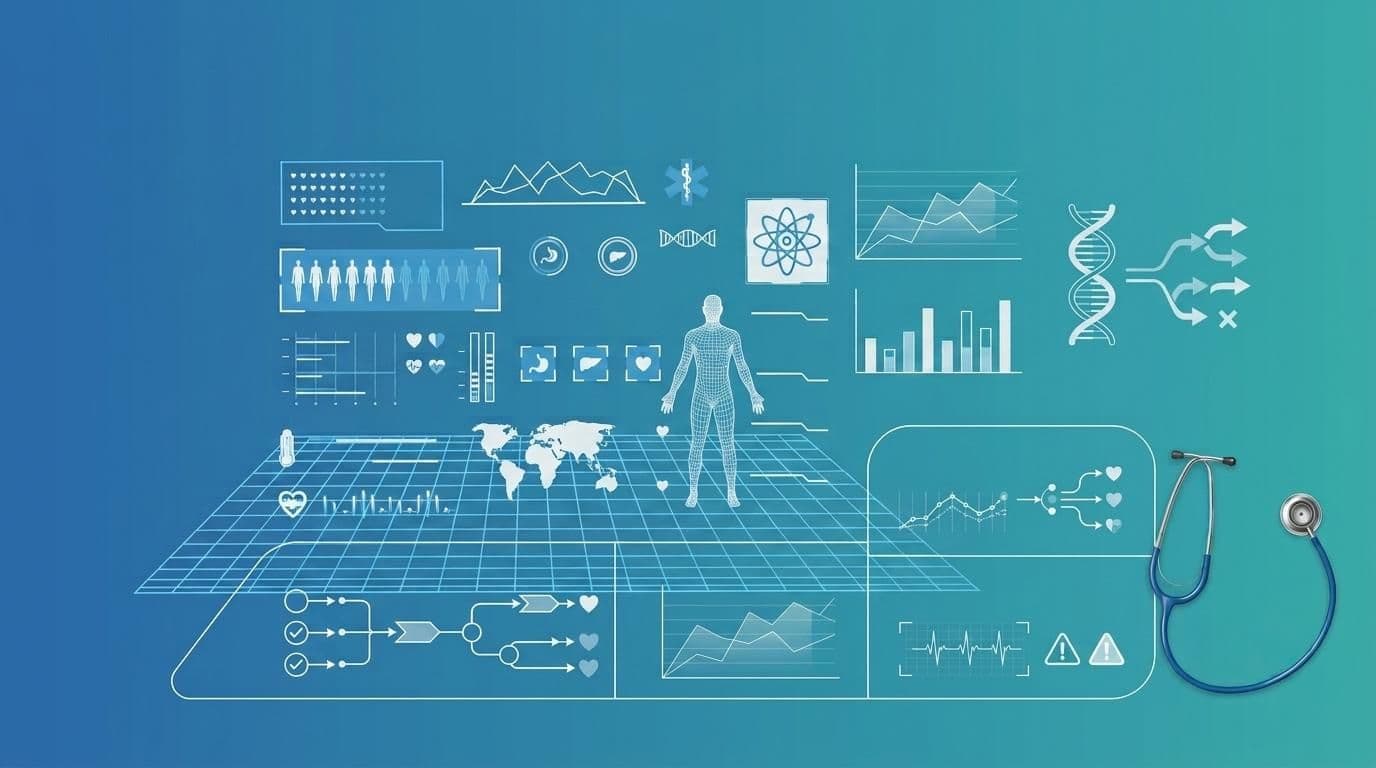
Clinical Decision Support Platform
DiagnomIQ is an AI-powered Clinical Decision Support Platform developed by Softnotions that helps healthcare professionals generate treatment reports, analyse clinical data, and predict patient outcomes faster.
Empowering Clinicians with Intelligent Decision Support
DiagnomIQ is an AI-powered healthcare platform designed to support doctors, hospitals, clinical teams, and public users in managing and understanding complex cancer cases. For doctors and hospitals, DiagnomIQ brings clinical information, specialized AI analysis, consensus evaluation, and MDT workflows together to help generate structured cancer-care reports. Features such as Clinical Voice Scribe, clinical data capture, and doctor validation further support the clinical workflow.
Public users can enter their health and medical information, upload relevant documents, and generate AI-assisted informational reports based on the information they provide. DiagnomIQ provides different workflows for healthcare professionals, organizations, and individuals.
Managing Complex Clinical Information: Cancer cases involve information from multiple sources, including pathology, radiology, laboratory results, treatment history, medical records, and disease progression. Bringing these details together for a complete case assessment can be complex and time-consuming.
Bringing Together Multiple Clinical Perspectives: MDT assessments often involve specialists from different clinical areas. Reviewing the same case from different perspectives and consolidating their findings into a structured assessment can be challenging.
Supporting Structured Clinical Assessment: Clinical teams need to review information from multiple perspectives, identify areas of agreement or difference, and organize findings in a clear and consistent way to support MDT discussions
An Integrated Digital Workflow: DiagnomIQ brings clinical information, AI-assisted analysis, multiple clinical perspectives, consensus evaluation, and MDT reporting together on one platform.
The platform compares AI-generated findings, highlights areas of agreement and difference, and supports the creation of structured MDT reports for review and validation by qualified doctors.
DiagnomIQ is designed to make complex cancer-case assessment more structured, collaborative, and efficient—while keeping clinical expertise, review, and validation at the center of the process.
DiagnomIQ provides a structured AI-assisted approach to managing complex cancer cases. It brings relevant clinical information together, analyzes the case from multiple clinical perspectives, and supports healthcare professionals in developing a comprehensive assessment.
Structured Case Assessment: DiagnomIQ brings together pathology, radiology, laboratory results, treatment history, disease progression, medical documents, and other relevant case information in one structured workspace. The platform then analyzes the information using specialized AI agents and models to identify relevant clinical findings, relationships, and potential areas that may require further review.
Intelligent MDT Report Generation: The platform compares the analysis from different clinical perspectives and AI models to identify consistent findings, differences, or areas of uncertainty. Its Consensus Engine evaluates these findings and can trigger additional analysis when significant differences or inconsistencies are identified. The consolidated assessment is then used to support the generation of a structured MDT report.
Clinician-in-the-Loop: DiagnomIQ is designed to support clinical expertise, not replace it. AI-generated findings and reports can be reviewed and validated by qualified healthcare professionals, while final clinical decisions remain with the appropriate clinician or MDT team.
Integrated Clinical Workflow: DiagnomIQ supports the wider clinical workflow through:
Clinical Voice Scribe Helps clinicians quickly capture and organize clinical information through voice, reducing manual documentation and supporting structured case records.
- Structured case management for organizing patient cases
- Document upload and management for supporting clinical information
- Configurable MDT reports for structured clinical documentation
- Role-based access for controlled collaboration
- Hospital and doctor workflows to support different user requirements
- Public-user workflows for organizing and sharing relevant health information with healthcare professionals
AI-Assisted MDT Report Generation: Uses specialized AI agents and multiple AI models to analyze complex cancer cases from relevant clinical perspectives.
Multi-Agent Clinical AI: Deploys specialized AI agents to analyze complex cancer cases from different clinical perspectives, including Hematopathology, Oncology, Radiology, and Supportive Care.
Multi-Model AI Intelligence: Uses multiple AI models rather than depending on a single model. Different models can be selected based on the requirements and suitability of each clinical domain, with outputs compared to similarities, differences, conflicts, and areas requiring further evaluation.
Consensus Engine: The Consensus Engine evaluates findings from different AI agents and models, identifies disagreements and inconsistencies, and can trigger additional rounds of analysis when required. The MDT report is generated after the required consensus threshold is achieved.
Clinical Voice Scribe: Enables clinicians to capture clinical information using voice, reducing manual data entry and helping incorporate information into the structured case workflow.
Comprehensive Clinical Data Capture: Brings together medical history, pathology, radiology, laboratory results, treatment history, disease progression, and supporting medical documents within a structured case.
Clinician Review & Validation: Allows qualified healthcare professionals to review and validate AI-assisted findings and reports before they are used within the appropriate clinical workflow.
Hospital-Specific MDT Workflows: Supports dedicated hospital environments with configurable clinical workflows, user roles, permissions, and hospital-specific MDT report templates.
Doctor & Patient Management: Enables hospitals to manage doctors, patients, clinical cases, roles, and permissions within a dedicated environment.
Public User Case Management: Allows individuals to create cases, enter relevant medical information, upload supporting reports, and generate AI-assisted informational reports.
Web & Mobile Access: Provides web and mobile access with workflows designed for hospitals, doctors, and public users.
Secure Role-Based Access: Provides role-based access and permission management to help ensure users can access information according to their responsibilities.
Healthcare System Integration: Designed to work alongside existing hospital applications and healthcare systems, supporting integration with existing workflows and systems.
Configurable Reporting: Allows hospitals to configure report structures and maintain their preferred MDT report formats using customizable templates.
Compliance & Standards: Designed with privacy, security, clinical governance, data protection, cybersecurity, interoperability, and responsible AI principles in mind to support secure and compliant healthcare workflows throughout development, deployment, and operation.
Comprehensive Multidisciplinary Assessment: DiagnomIQ brings together clinical information and multiple clinical perspectives within a structured digital workflow, helping healthcare teams organize and assess complex cancer cases more comprehensively.
AI-Assisted Comparative Analysis: The platform can compare findings generated through different AI agents and models, helping identify similarities, differences, and areas that may require further evaluation.
Reduced Clinical Documentation Effort: Clinical information can be captured through structured data entry, document uploads, and Clinical Voice Scribe. This can reduce repetitive manual documentation and make it easier to organize relevant information within a single case.
More Structured MDT Preparation: By organizing clinical information, AI-assisted findings, consensus outcomes, and reports within one workflow, DiagnomIQ can help clinical teams prepare complex cases for MDT review in a more structured manner.
Clinician-Centered AI: DiagnomIQ is designed to support healthcare professionals rather than replace them. AI-generated findings and reports remain subject to clinician review and validation.
Improved Collaboration Across Clinical Perspectives: The platform provides a common digital environment where clinical information and insights from different perspectives can be brought together, supporting collaboration between specialists.
Hospital-Specific Flexibility: DiagnomIQ can support hospital-specific workflows, reporting structures, user roles, and MDT templates, allowing healthcare organizations to configure the platform according to their requirements.
Centralized Case Information: Patient-related clinical information, medical documents, treatment history, disease progression, and other relevant information can be organized within a structured case, providing a consolidated view for assessment and MDT review.
Support for Different User Groups: DiagnomIQ provides tailored workflows for hospitals, doctors, and public users.
Hospitals can manage organizational and MDT workflows, doctors can manage clinical cases and review AI-assisted findings, and public users can organize their medical information and generate AI-assisted informational reports.
Scalable Healthcare Architecture: The platform is designed to evolve with healthcare organizations and can support different user groups, clinical workflows, AI capabilities, hospital environments, reporting requirements, and future healthcare-system integrations.
Foundation for Future AI-Assisted Cancer Care: DiagnomIQ provides a foundation for expanding AI-assisted multidisciplinary cancer-care workflows across different cancer types, clinical specialties, healthcare organizations, and geographical regions.
DiagnomIQ offers a flexible subscription model designed to support public users, individual clinicians, and hospitals/healthcare organizations.
Plans can be tailored based on user access, case volume, clinical collaboration, reporting needs, analytics, integrations, and organizational requirements, allowing DiagnomIQ to support users from individual case management to larger hospital and clinical-team workflows.
Doctor Pro -Individual Clinicians & Public Users: Designed for individual doctors, healthcare professionals, and public users. The plan provides limited access to cases.
Hospitals and Clinics: Designed for clinics and hospitals managing clinical teams. The plan provides limited user access and limited case access.
Technologies and Tools
Microsoft Teams for Team Communication & Collaboration

Claude for AI-Powered Clinical Analysis & Summarization

Lucidchart for visualizing Diagrams/ Architecture

Git for Source Code Management

Jira For Project Management
Meta Llama for AI-Powered Clinical Decision Support
Let's work together to solve your business challenge
Connect with us and let's start the journey toward your next breakthrough.
Schedule a Discovery CallLet’s work together to solve your business challenge
You May Also Like
These Related Stories